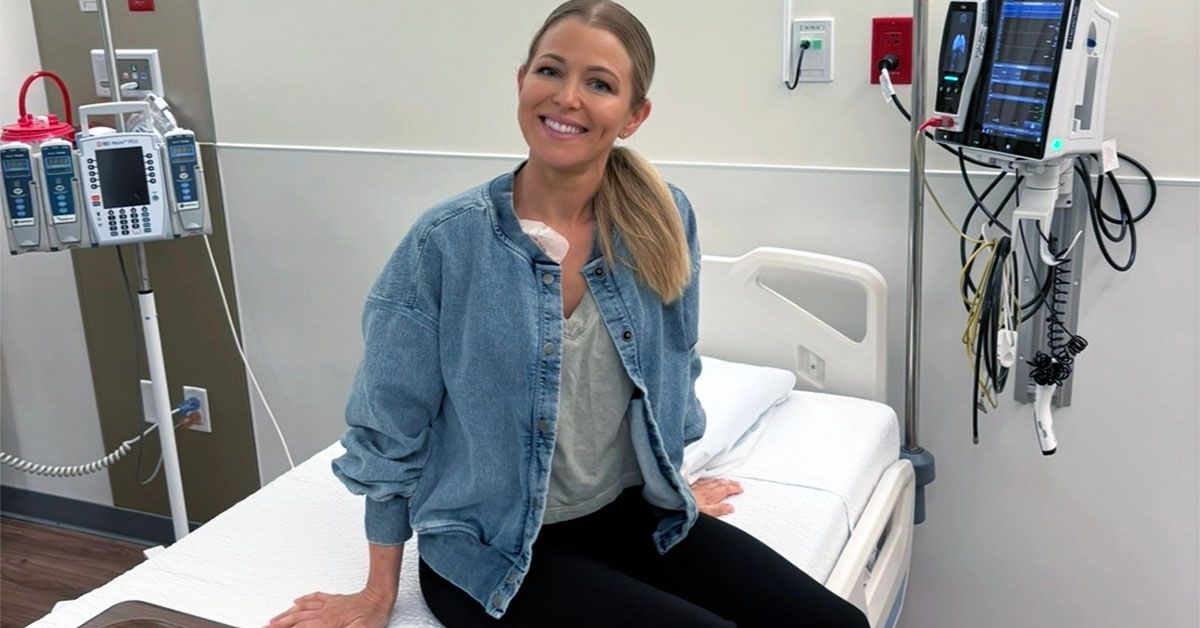

In 2024, 36-year-old Gabby Zappia noticed blood in her stool while pregnant with her third child. Her obstetrician attributed it to pregnancy-related hemorrhoids, an explanation that seemed plausible at the time. After her son was born, the bleeding and other symptoms continued, and Zappia pushed for further evaluation.
A colonoscopy uncovered a large mass. In December 2024 she was diagnosed with stage IV colon cancer that had already spread to her liver. Zappia underwent a colon resection and began combined chemotherapy and immunotherapy in January 2025 at City of Hope. In April 2025 she paused systemic treatment to have a liver resection and placement of a hepatic arterial infusion (HAI) pump, then resumed chemotherapy afterward.
After 15 rounds of chemotherapy she was declared no evidence of disease and rang the survivor bell in September 2025. Months later, circulating tumor DNA (ctDNA) testing detected cancer again and a PET scan confirmed activity in her liver. She had another liver surgery in January 2026. Because ctDNA remains detectable, she is now exploring clinical trials.
The diagnosis forced major changes in Zappia’s life: she stopped working to focus on treatment and recovery, relied on her husband for many daily tasks, and stepped back from some parenting responsibilities. She urges other patients to trust their instincts, press for testing (including colonoscopy), and seek second opinions when they don’t feel heard. “We need more awareness. We need to listen to young patients,” she said.
Rising colorectal cancer in younger adults
Colorectal cancer, once primarily a disease of older adults, is increasing in people under 50 and has become the leading cause of cancer-related death in U.S. adults under 50, according to a January 2026 JAMA study. Clinicians at City of Hope report seeing dozens of patients in their 20s, 30s, and 40s each week. Pashtoon Kasi, MD, MS, Medical Director of GI Medical Oncology at City of Hope Orange County, notes that about three out of four patients under 50 are diagnosed with advanced disease because routine screening is not recommended for most people under 45.
Hereditary syndromes account for only a small fraction of early-onset colorectal cancer. Many younger patients have no known risk factors, so researchers are investigating possible contributors such as antibiotic exposure, changes in the microbiome, diet, and environmental exposures like microplastics. No single cause has been identified.
Symptoms to take seriously
Because many younger adults are not eligible for routine screening, paying attention to symptoms is critical. Warning signs that should prompt prompt evaluation include:
– Rectal bleeding
– Changes in bowel habits (diarrhea or constipation lasting more than a few weeks)
– Unexplained abdominal pain
– Unintentional weight loss
Experts caution that symptoms often dismissed as hemorrhoids—especially during or after pregnancy—should lead to further investigation, including consideration of colonoscopy.
Research and future tools
City of Hope researchers are working to improve treatments and diagnostics for younger patients. Ongoing efforts include enhancing the effectiveness of immunotherapy, developing new targeted drugs, testing combinations of chemotherapy with immunotherapy and radiosensitizers for rectal cancer, and exploring cellular therapies such as CAR-T for refractory disease.
Ajay Goel, PhD, is developing a blood-based test aimed at detecting early-onset colorectal cancer. Early results are promising: he reports a test with roughly 90% accuracy in detecting young-onset colon cancers, though it is not yet available for clinical use. If validated in larger studies, he envisions incorporating a blood test into routine annual labs for younger patients.
Risk reduction
While no approach guarantees prevention, the American Cancer Society recommends steps to help lower colorectal cancer risk:
– Begin screening with colonoscopy at age 45 or older; if you are younger, discuss stool- or blood-based testing options with your doctor.
– Maintain a healthy weight, eat a diet rich in vegetables, fruits, and whole grains and low in red and processed meats, and exercise regularly.
– Limit alcohol and avoid tobacco use.
– Talk with your clinician about supplements such as vitamins, calcium, and magnesium if appropriate.
Zappia’s message is simple and urgent: know your body and push for answers. If something feels off, ask for testing and a second opinion. By sharing her story, she hopes others will be diagnosed earlier and receive the care they need.