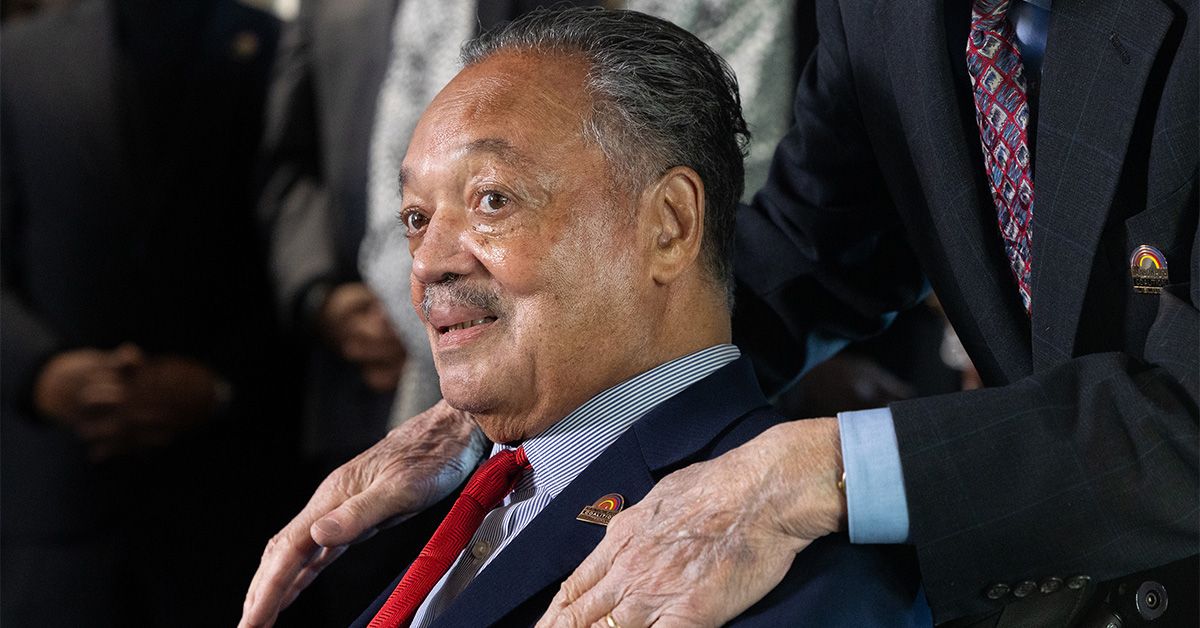

The Rev. Jesse Jackson, civil rights leader, two-time U.S. presidential candidate, and founder of the Rainbow PUSH Coalition, has died at 84, his family announced. “It is with profound sadness that we announce the passing of Civil Rights leader and founder of the Rainbow PUSH Coalition, the Honorable Reverend Jesse Louis Jackson, Sr. He died peacefully on Tuesday morning, surrounded by his family,” the family statement said, noting his lifelong commitment to justice, equality and human rights.
Jackson revealed a Parkinson’s disease diagnosis in 2017. In April 2025, physicians revised that diagnosis to progressive supranuclear palsy (PSP), a rare progressive neurological disorder that is often mistaken for Parkinson’s disease in its early stages. It is not yet clear whether PSP was the direct cause of his death. Following a hospitalization in November, the family said he had been battling “several infections consistent with the progression of his PSP diagnosis.”
His public openness about the diagnosis drew attention to PSP and the diagnostic challenges it poses. Kristophe Diaz, PhD, CEO of CurePSP, said Jackson’s visibility helped highlight the need for greater awareness, earlier detection, better treatments and research toward a cure.
What is PSP
Progressive supranuclear palsy is a rare neurodegenerative condition that affects brain regions controlling movement, balance, eye movements, speech and thinking. Most people are diagnosed in their 60s or 70s. PSP is associated with accumulation of a misfolded form of the protein tau in certain brain cells; this buildup damages cells and disrupts the functions they control. Most cases appear sporadic rather than inherited, and researchers have not identified definitive lifestyle or environmental causes.
Symptoms and how PSP differs from Parkinson’s
PSP and Parkinson’s disease can look similar at first, sharing features such as stiffness and slowed movement, which can make early diagnosis difficult. Key differences that often emerge as the diseases progress include:
– Balance and falls: People with PSP often experience sudden, unexplained backward falls earlier in the disease, whereas balance problems in Parkinson’s usually develop more gradually.
– Eye movements: Difficulty moving the eyes, especially looking up or down, is a hallmark of PSP and can interfere with reading, navigating stairs and maintaining visual focus. This is not typically an early feature of Parkinson’s.
– Tremor: Tremors are more characteristic of Parkinson’s and are less common in PSP.
– Medication response: Parkinson’s symptoms often respond to dopamine-replacement therapy such as levodopa. People with PSP usually have little or only transient improvement from these medications.
– Progression: PSP generally progresses more rapidly than Parkinson’s, often leading to more severe mobility and communication challenges in a shorter time frame.
Diagnosis is clinical and may be revised as symptoms evolve. Increasing awareness of distinguishing features can help clinicians reassess initial Parkinson’s diagnoses when signs point toward PSP.
Management and care
There is no cure for PSP. Care focuses on symptom relief, safety and quality of life. Options can include:
– Medications: Parkinson’s drugs may provide limited, short-lived benefit for some movement symptoms but are often less helpful for PSP.
– Vision aids: Prism lenses or other specialized glasses can sometimes compensate for eye movement problems.
– Botulinum toxin (Botox): Injections may reduce muscle stiffness or spasms in select cases.
– Rehabilitation therapies: Physical therapy addresses balance and mobility; occupational therapy helps adapt daily tasks; speech therapy supports communication and swallowing.
– Team-based care: Because PSP affects multiple functions, multidisciplinary management tailored to individual needs is commonly used.
Research continues into the role of tau protein and potential disease-modifying therapies that might slow progression.
Jackson’s legacy
Jackson’s career spanned decades of activism, voter registration drives, and public service. His family highlighted his role as a tireless advocate who elevated marginalized voices and mobilized millions. His case has increased public attention to PSP, underscoring diagnostic challenges and the need for more research and resources for those living with rare neurodegenerative diseases.