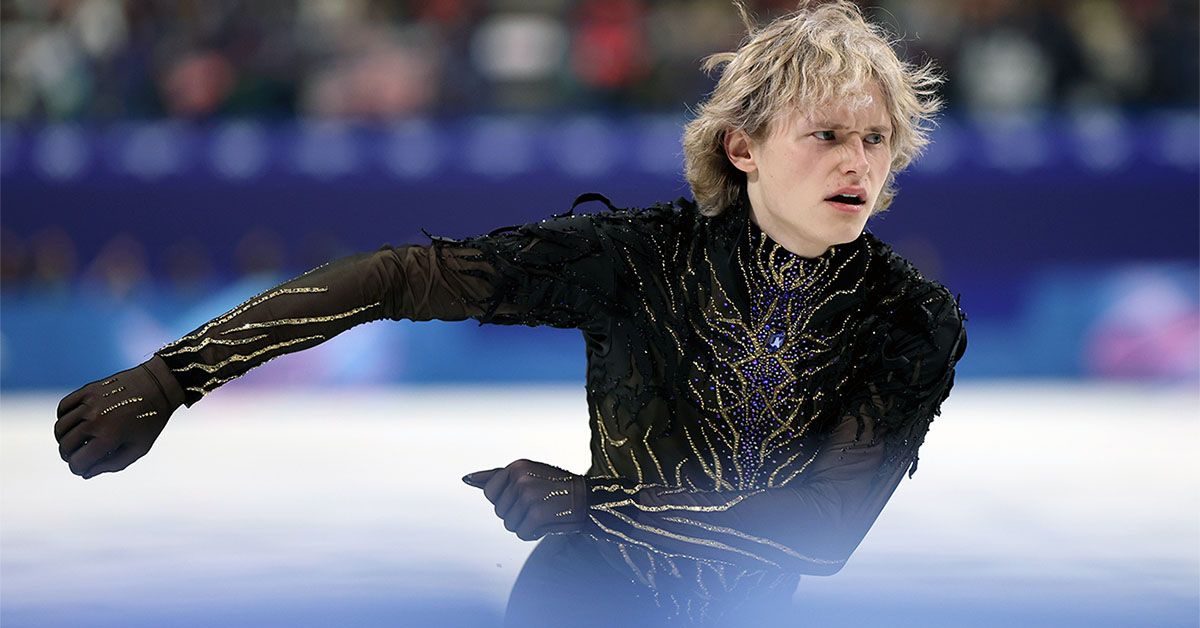

Ilia Malinin, the 21-year-old Team USA figure skater nicknamed the “Quad God,” acknowledged the internal struggles that he says affected his Olympic performance after finishing eighth in the men’s figure skating final at the 2026 Winter Olympics in Milan Cortina.
Malinin fell twice during his free skate. In an Instagram post on February 16, he described fighting “invisible battles” and admitted negative thoughts plagued him before he stepped onto the ice.
“On the world’s biggest stage, those who appear the strongest may still be fighting invisible battles on the inside,” Malinin wrote. “Even your happiest memories can end up tainted by the noise. Vile online hatred attacks the mind and fear lures it into the darkness, no matter how hard you try to stay sane through the endless insurmountable pressure. It all builds up as these moments flash before your eyes, resulting in an inevitable crash.”
Malinin came to the Games as one of the sport’s most dominant skaters: he was the reigning World Champion twice, had won three straight Grand Prix Finals and U.S. Championships, and is the only skater to land a quadruple axel in competition and the first to land seven quads in one program. Still, the weight of being an Olympic gold hopeful felt overwhelming. “All of this pressure, all of the media, and just being the Olympic gold hopeful was a lot,” Malinin told NBC News. “It was too much to handle.”
Performance anxiety in sport is common; a 2019 review estimated that roughly 30–60% of athletes experience it. It shows up as intense pre-competition anxiety that can impair performance. The Yerkes-Dodson Law historically suggested an optimal mid-level of arousal for best performance, but more recent work indicates that cognitive anxiety before an event tends to be maladaptive—the calmer an athlete can be before and during performance, the better, said Alex Dimitriu, MD, a psychiatry and sleep medicine specialist.
Mental signs of sports performance anxiety include intense fear of failure, disrupted focus, overthinking or forgetting automatic skills, and doubting one’s abilities. In a February 17 interview on TODAY, Malinin said the pressure and attention “really can get to you if you’re not ready to fully embrace it. That may be one of the mistakes I made; I was not ready to handle that to the fullest extent.”
Dimitriu outlined strategies to address performance anxiety:
– Recognize it: notice when anxiety is high enough to harm performance.
– Work with a sports-savvy mental health professional: cognitive behavioral therapy (CBT) can target performance-related thoughts and behaviors.
– Train mentally as well as physically: practice mindfulness, deep breathing, and visualize handling mistakes.
– Develop consistent pre-performance routines: warm-ups, cues, music, self-talk, and meditation can help ground the athlete.
Fellow elite athlete Simone Biles, the most decorated gymnast of all time, said she understands what Malinin faced. Biles reached out to him privately after watching his struggles. She experienced a related phenomenon at the Tokyo Olympics known as the “twisties,” where gymnasts lose spatial awareness midair; other sports may call similar mental blocks the “yips.” Biles has discussed how isolating and frightening that loss of control can be and offered Malinin support and encouragement. “I’ve sent him messages on Instagram,” she told TODAY. “I know what he’s going through and I know most athletes might not be able to relate, and it’s really, really hard to watch.” Biles expressed confidence in his future: “I see him coming out on top after this. We’re all just cheering for him.”