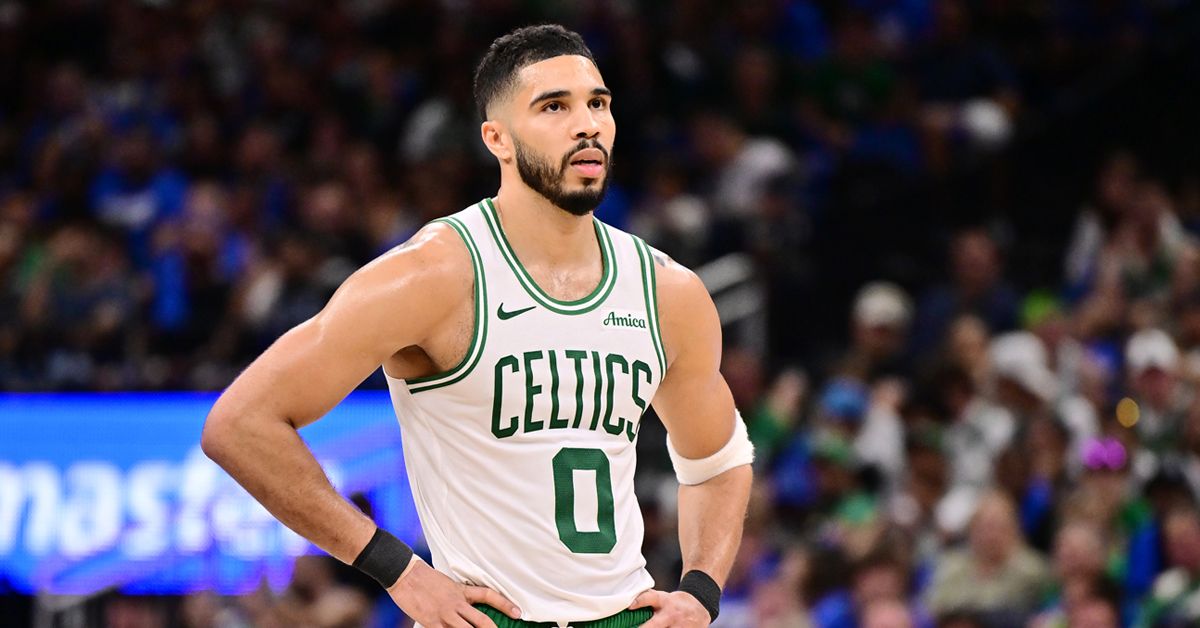

When Celtics forward Jayson Tatum ruptured his Achilles tendon on May 12 during the Eastern Conference playoff game against the New York Knicks, he immediately sensed something was wrong. “When I pushed off, I could hear it pop,” he told Healthline, adding that the sensation felt like being kicked even though no one was behind him. He fell, clutched his calf and had surgery the next day.
In the days after surgery, Tatum said the opioid pain medications he was given made him nauseous and disoriented. He recalled doses at night that left him feeling sick and out of it, so much so that he told his trainer he would rather endure the pain than continue taking the medicine that was making him feel worse.
About 19 weeks into recovery, Tatum switched to a non-opioid pain medication called Journavx, prescribed by his orthopedic surgeon, Martin J. O’Malley, MD, at Hospital for Special Surgery. According to O’Malley, unlike opioids — which act on the central nervous system and can affect the brain’s reward pathways — Journavx works on the peripheral nervous system to reduce pain signaling and does not penetrate the brain. He emphasized, however, that individual responses vary and that patients should review risks and side effects with their doctors.
Tatum has teamed with the makers of Journavx to share his experience and to encourage conversations about pain-management alternatives. He described the recovery as a phased process: surgery, stitches removed at two weeks, wearing a protective boot for roughly 10 weeks, and progressing to crutches and partial (about 50%) weight-bearing around the one-month mark. Even as he advanced through rehab, he said the prescribed non-opioid medication helped manage persistent discomfort and “took the pain away.”
Because his injury happened in full view of fans and the media, Tatum said he wanted to be open about what he’s going through so other patients and their doctors might discuss different pain-management options. “I thought it was a perfect opportunity to be vulnerable, talk about what I’m dealing with, my process, and be a conversation starter,” he said.
The emotional toll was substantial. Tatum described feelings of disbelief and sadness when faced with a long recovery and uncertainty about whether he could push through the work required to return. He spoke about the helplessness of being immobilized and unable to bear weight, and about leaning on his support network — friends, his mother and his two children, 7-year-old Deuce and 14-month-old Dylan — as well as encouragement from fans.
O’Malley noted that timelines vary: for elite athletes, returning to pre-injury performance after an Achilles rupture often takes 9 to 12 months. For the average person, a basic return to normal activity is commonly seen in 10 to 12 weeks, with about six months before many people feel fully recovered. He stressed that physical therapy is the most important component of recovery and praised Tatum as “a model patient” who has committed fully to rehab.
The injury has reinforced Tatum’s focus on health and recovery. He said that when he entered the NBA at 19 he didn’t prioritize sleep, nutrition or recovery as much as he does now. At 27, he’s more deliberate about those areas, aiming to prolong his career and maximize his abilities for himself, his teammates and his family. He also said the experience deepened his appreciation for basketball — he doesn’t take the game for granted and is motivated to make the most of his return.